BYD Considers Local Assembly in India to Ease Import Curbs, Bloomberg Reports



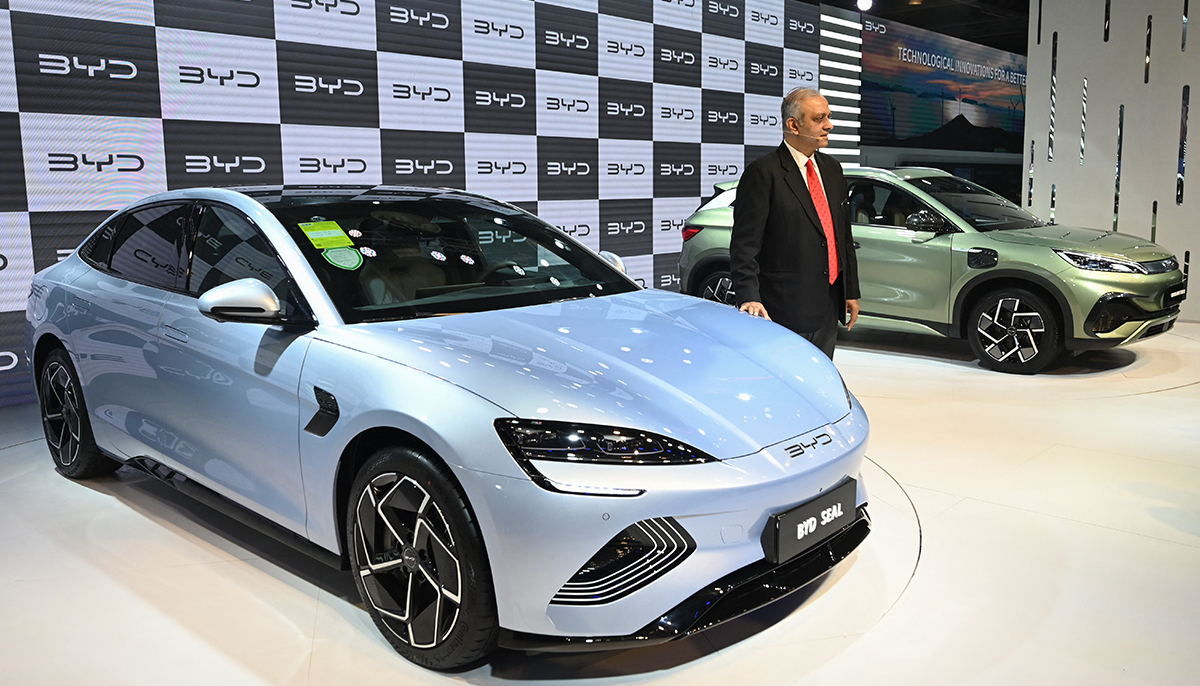
Chinese electric vehicle manufacturer BYD is reviewing plans to expand its footprint in India, including the possibility of assembling vehicles locally, as strong demand collides with the country’s restrictive import policies, according to people familiar with the matter, as reported by Bloomberg.


India limits the import of fully built vehicles to 2,500 units per model annually, a restriction that has increasingly constrained BYD’s ability to meet market demand. Dealerships across the country are reported to be holding hundreds of customer bookings, while much of the company’s recent inventory has already been sold out.

Despite these hurdles, BYD has posted robust growth in India. Sales climbed by nearly 88 percent last year to about 5,500 units, even as import duties on fully built cars reached up to 110 percent. The company has managed to stay competitive by pricing its electric models below several global rivals, including Tesla.
To ease both tariff pressure and volume restrictions, BYD is considering semi-knocked-down (SKD) assembly in India. Under this approach, partially assembled vehicles would be imported and completed locally.

Industry sources cited by Bloomberg estimate that SKD assembly could reduce duties from around 70 percent to roughly 30 percent, significantly lowering costs.
India had previously rejected BYD’s proposal to establish a full manufacturing facility, prompting the automaker to explore lower-investment alternatives. Current discussions are centered on the feasibility and regulatory acceptance of SKD assembly, which could offer faster approvals.
BYD currently sells multiple electric models in the Indian market, including the Atto 3 SUV, eMax 7 MPV, Seal sedan, and Sealion 7 SUV. Some models have received special approvals allowing imports beyond the standard quota limits, providing temporary relief from supply constraints.






China’s August EV Best-Sellers Include Several Models Sold in Nepal
Mitsubishi Unveils All-New Pajero, Bringing Back the Iconic 4WD